Key Takeaways
- Local regulations vary widely: Before planning, verify your municipal bylaws and fire codes.
- Legal approval is just the first step: Placement and setup still impact usability and safety.
- The right fire pit depends on your space, fuel availability, and maintenance preferences.
- Strategic placement improves comfort, safety, and long-term use.
- Planning helps avoid costly mistakes and compliance issues.
Understanding Local Fire Pit Regulations
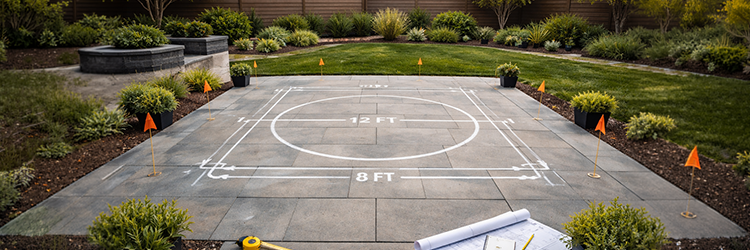
The first question any homeowner should ask isn’t “what type of fire pit do I want?” It’s “Can I actually have one?”
Fire pit regulations vary significantly depending on where you live. Municipal codes, fire safety rules, and HOA guidelines can all affect whether a fire pit is allowed and under what conditions.
Start by contacting your local fire department or municipal office.
Key things to confirm:
- Whether fire pits are allowed at all
- Required clearance distances from structures and property lines
- Permit requirements
- Seasonal or weather-related restrictions
- Approved fuel types (wood, propane, natural gas)
Some areas restrict wood-burning fire pits but allow gas alternatives. Others have strict spacing rules that may limit installation on smaller properties. Getting clarity upfront prevents delays, fines, or having to remove a non-compliant installation later.
What Happens After Legal Approval
According to the Home Improvement Outlook Survey, 67% of homeowners plan to dedicate more time to outdoor upgrades, with 60% expecting to invest between $1,000 and $5,000 in their projects.
Once you confirm that a fire pit is permitted, the next step is making practical decisions about how it will function in your space.
Instead of placing it wherever it fits, think about how you’ll actually use it. Will it be for occasional evenings, regular entertaining, or seasonal use? Your answer influences placement, fuel type, and size.
A fire pit that meets regulations but ignores usability often ends up underused.
What Type of Fire Pit Works Best for Your Space

Choosing the right type depends on your preferences, maintenance expectations, and local restrictions.
Wood-Burning Fire Pits
These provide a traditional fire experience with real flames and crackling wood. However, they require more maintenance, produce smoke, and may be restricted in some areas.
Natural Gas Fire Pits
These are convenient and low-maintenance. They ignite instantly, produce minimal smoke, and are ideal for frequent use. They do require a fixed gas line connection.
Propane Fire Pits
Propane offers similar benefits to natural gas but with more flexibility in placement. Tanks need to be monitored and replaced periodically.
Outdoor Fireplaces
These are larger, structured installations with chimneys that direct smoke upward. They are suitable for properties with enough space and where local codes allow them.
Where Should Your Fire Pit Actually Go
Placement directly affects safety, comfort, and how often you’ll use your fire pit.
Important factors to consider:
- Clearance: Maintain required distance from structures and flammable materials
- Wind direction: Avoid placing it where smoke blows toward seating areas or your home
- Distance from the house: Too far reduces usage, too close can cause discomfort
- Ground surface: Install on stable, non-flammable surfaces like stone or concrete
Choosing the right location ensures your fire pit is both safe and practical.
How Does Professional Planning Help
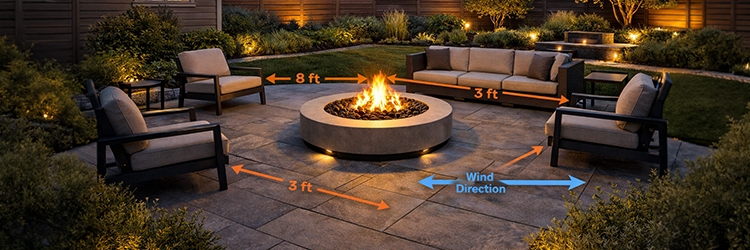
Even a simple fire pit can create problems if not planned properly.
Common issues include:
- Poor drainage leading to water buildup
- Smoke blowing into seating or indoor spaces
- Conflicts with future patio or landscape upgrades
A well-thought-out plan helps avoid these mistakes and ensures the fire pit fits your space long-term. Remote planning can still provide a clear layout, helping you visualize placement, spacing, and functionality before installation begins.
What About Maintenance and Seasonal Use
Maintenance depends on the type of fire pit you choose.
- Wood-burning: Requires ash cleanup and wood storage
- Gas systems: Need occasional inspection of connections
- Fireplaces: May require chimney cleaning
Climate also plays a role. In colder regions, covering or winterizing your fire pit can extend its lifespan. Think about how often you’ll use it and in which seasons before finalizing your setup.
Integrating Your Fire Pit With Existing Features
If your backyard already includes patios, seating, or landscaping, your fire pit should fit naturally into that setup.
Consider:
- Easy access from seating areas
- Safe spacing from plants and structures
- Logical movement around the space
This helps ensure the fire pit feels practical rather than awkwardly placed.
Why Professional Expertise Matters for Fire Pit Planning
At Sol & Arbor, we approach fire pits as part of a broader outdoor planning process rather than standalone additions.
Our work begins with understanding the constraints of your specific property, including local regulations, layout limitations, and how you intend to use the space. From there, we develop clear, functional plans that show how a fire pit can be positioned for safety, accessibility, and long-term usability.
Because our process is fully remote, homeowners can access professional-level planning without coordinating multiple contractors during the early stages. This makes it easier to make informed decisions before any installation begins.
Most importantly, we help ensure your fire pit is not just compliant, but practical and well-suited to your space, so it becomes a feature you actually use and enjoy over time.
Final Takeaway
Yes, you can have a fire pit in your backyard, but only if it meets local regulations and is planned carefully.
Start with compliance. Then focus on how the fire pit will actually function in your space. Placement, fuel type, and maintenance all influence whether it becomes a feature you use regularly or one that gets ignored.
A little planning up front makes the difference between a fire pit that simply exists and one that adds real value to your outdoor space.
Work With Sol & Arbor to Plan Your Outdoor Fire Feature
At Sol & Arbor, we help homeowners design outdoor spaces that are both functional and thoughtfully planned. If you’re evaluating if a fire pit is possible on your property or deciding how to incorporate one effectively, our remote design approach gives you clarity before construction begins.
A well-planned fire pit starts with the right decisions early on. If you’re ready to move forward with confidence, Sol & Arbor can help you map out a solution that fits your space, your needs, and your local requirements.