Key Takeaways
- Smokeless fire pits use a process called secondary combustion to burn off smoke before it escapes.
- The dual-wall design channels heated air back into the flame, reducing visible smoke dramatically.
- These fire pits burn hotter and more efficiently, using less wood than traditional open pits.
- They are a cleaner, more comfortable option for entertaining guests in your backyard.
- Integrating a smokeless fire pit into a professionally designed outdoor space elevates both function and aesthetics.
- Placement, seating arrangement, and surrounding materials all affect how well a fire feature performs in your landscape.
There is something irreplaceable about gathering around a fire. The warmth, the light, the sound of crackling wood, it draws people together in a way few outdoor features can.
But if you have spent an evening dodging smoke, wiping your eyes, and leaving the backyard smelling like a campfire, you already know the downside of a traditional fire pit. That is where smokeless fire pits come in.
More homeowners are asking the same question: how does a smokeless fire pit work, and is it worth adding to your outdoor space? The short answer is yes and understanding the science behind it will help you make a smarter decision for your backyard.
What Is a Smokeless Fire Pit
A smokeless fire pit is a wood-burning fire feature specifically engineered to reduce the amount of visible smoke it produces. The word “smokeless” does not mean zero smoke; it means significantly less than a standard open pit.
Traditional fire pits burn wood in an open chamber. Heat, ash, embers, and unburned gases all rise together and escape into the air. The result is a thick cloud of smoke that follows the wind and usually whoever is sitting nearby.
Smokeless fire pits solve this by using a smarter combustion process. Instead of letting unburned particles escape, they redirect and reignite them. The fire runs cleaner, burns hotter, and produces far less smoke overall.
How Does a Smokeless Fire Pit Work
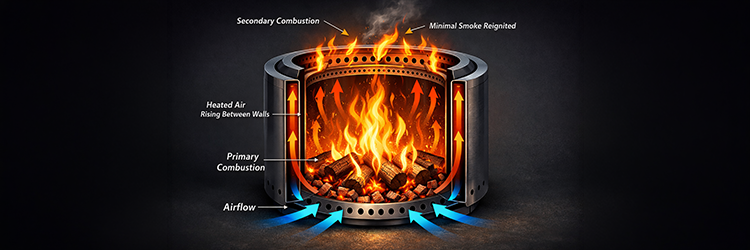
The key is a mechanism called secondary combustion. Here is how it works, step by step.
Primary Combustion
When you light the wood at the base of the fire pit, you get your first burn. Oxygen enters through vents at the bottom of the unit, feeding the initial flame. This part works the same as any fire.
Air Heating in the Double Walls
Smokeless fire pits are built with an inner wall and an outer wall. As the fire burns, the space between those walls heats up rapidly. That superheated air begins to rise through the structure toward the top rim of the pit.
Secondary Combustion
At the top edge of the fire pit, that hot air is released back into the flame through a series of small holes or vents. When this high-temperature oxygen meets the rising smoke and unburned gases, it ignites them again.
This second burn is what eliminates most of the visible smoke. The particles that would otherwise drift into the air and into your eyes are instead consumed by the flame.
The result is a cleaner, more intense fire that uses the same wood more completely.
Why Does the Dual-Wall Design Matter
The double-wall structure is not just a visual design choice; it is the engine behind the whole system.
By creating an insulated channel for air to travel upward, the pit preheats the oxygen before it re-enters the combustion zone. Preheated air burns much more effectively than cool outside air. That is what makes the secondary burn possible.
It’s common for homeowners to underestimate how much the structure of a fire feature affects its performance. A poorly designed fire pit placed in the wrong location will struggle to burn cleanly regardless of the fuel used. Airflow, placement, and surrounding landscape materials all play a role.
What Are the Real Benefits of a Smokeless Fire Pit

Beyond the science, what does a smokeless fire pit actually deliver for your everyday backyard experience?
Cleaner Air Around the Fire
The most immediate benefit is comfort. Without a constant stream of smoke drifting across the seating area, your guests can actually enjoy sitting around the fire. No more moving chairs every few minutes or breathing in acrid fumes.
Less Ash and Easier Cleanup
Because the fire burns more completely, there is less leftover ash and debris. This also means less mess on your patio or deck after a fire evening.
More Efficient Wood Burning
A smokeless fire pit burns hotter and more completely. You get a stronger, longer-lasting fire from the same amount of wood. Over time, that translates into real savings and fewer trips to replenish the wood supply during a gathering.
Reduced Odor on Clothing and Furniture
One of the most common complaints about traditional fire pits is the smell that lingers on clothing and outdoor furniture. With far less smoke escaping, this problem is nearly eliminated.
Safer for Children and Guests
Reduced embers and sparks mean a safer environment, especially in backyards where children or pets are present. The fire stays contained and burns more predictably.
Versatility for Cooking
Many smokeless fire pits are compatible with cooking grates, making them a functional addition to an outdoor kitchen or entertainment area. The hotter, cleaner burn is ideal for grilling or open-fire cooking. Market data reflects this dual-use appeal. According to industry research, 54 percent of homeowners who own a fire pit use it primarily for entertainment, while 38 percent use it for warmth during cooler months and the ability to cook over the same feature adds a third layer of value that makes the investment more practical year-round.
How Do You Incorporate a Smokeless Fire Pit Into a Backyard Design

A smokeless fire pit works best when it is part of a cohesive outdoor environment. Dropping one into the middle of an unplanned backyard rarely delivers the experience homeowners are hoping for.
Here are the key design considerations:
- Seating orientation – circular or curved seating arrangements work best for fire features, allowing guests to gather evenly around the flame without crowding.
- Surface material – stone, concrete pavers, and gravel are all appropriate materials for the area immediately surrounding a fire pit. Avoid wooden decking directly beneath the unit unless it is a model specifically designed for that use.
- Clearance and safety zones – most manufacturers recommend a minimum clearance from structures and overhanging vegetation. Your design needs to respect these guidelines.
- Lighting integration – ambient outdoor lighting around the fire area creates a layered effect after dark, extending the usability of the space.
- Plant selection nearby – choose heat-tolerant plantings at an appropriate distance. Certain grasses, ornamental shrubs, and perennials can frame a fire area beautifully without creating a fire hazard.
At Sol & Arbor, we approach fire features as an anchor element within a broader landscape composition. The fire pit becomes the focal point that organizes the seating, pathways, plantings, and lighting around it.
Final Takeaway
A smokeless fire pit delivers a measurably better fire experience. The dual-wall design and secondary combustion process work together to burn fuel more completely, produce less smoke, and create a cleaner, hotter flame with less maintenance.
For homeowners investing in a high-quality outdoor living space, it is one of the most impactful additions you can make. The science is well-established, the performance difference is real, and the design options have expanded to match luxury outdoor aesthetics.
But the fire pit itself is only part of the equation. Where it sits, what surrounds it, and how it connects to the rest of your outdoor environment determine whether it becomes a feature people gather around or one that gets overlooked.
At Sol & Arbor, we design outdoor spaces where every element, including fire features, is positioned and integrated with intention. Our remote landscape design process means affluent homeowners across the country can access professional-grade design expertise without leaving home. If you are ready to build an outdoor environment that works as beautifully as it looks, we would love to help you plan it right from the beginning.