Key Takeaways
- Choose between wood-burning, propane, or natural gas fire pits based on your property, lifestyle, and local regulations.
- Always have a fire extinguisher, garden hose, or bucket of sand within reach before lighting.
- Never burn treated wood, trash, or accelerants as they release toxic fumes and create dangerous flare-ups.
- A professionally designed fire pit area transforms a backyard into a year-round outdoor living space.
- Proper fire-building technique improves safety, efficiency, and reduces smoke.
- Gas fire pits offer more control and convenience, while wood-burning requires more active management
A fire pit is one of the most versatile features you can add to an outdoor space. It creates warmth on cool evenings, brings people together, and adds a visual anchor to your backyard that few other elements can match.
But using a fire pit well goes beyond simply striking a match. You need to understand where to place it, how to light and maintain it safely, which fuel type suits your property, and how to integrate it into a cohesive outdoor living environment.
In this guide, we cover everything homeowners need to know, from the basics of fire pit types to safety practices.
Different Types of Fire Pits

Not all fire pits work the same way. The type you choose affects everything from how you light it to how you maintain it, where you can legally place it, and how it fits into your backyard design.
Wood-Burning Fire Pits
Wood-burning fire pits are the most traditional option. They produce that classic crackling sound and smoky aroma many homeowners love.
Propane Fire Pits
Propane fire pits connect to a portable propane tank that you can replace at most home improvement or hardware stores. They are easy to ignite, produce a consistent flame, and can be turned off immediately, which is a significant safety advantage.
Natural Gas Fire Pits
Natural gas fire pits connect directly to your home’s gas line. They are permanently installed, always ready, and eliminate the need to purchase fuel separately.
How Do You Light a Wood-Burning Fire Pit Safely
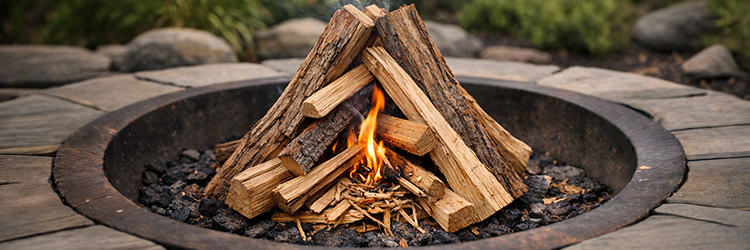
Lighting a wood fire properly saves you from frustration and reduces risk. Here is a step-by-step approach that works consistently.
What You Will Need
- Dry, seasoned firewood – hardwoods (oak, cherry, hickory) are denser, burn slower and more evenly, and produce less smoke per unit of heat than softwoods like pine, according to the California Air Resources Board.
- Kindling – small dry sticks or wood shavings
- Fire starters – newspaper, natural firelighters, or commercial starters
- Long fireplace matches or a long-handled lighter
- A fire poker or tongs
- A bucket of water, a garden hose, or a fire extinguisher nearby
Step-by-Step Lighting Process
Start by placing a layer of crumpled newspaper or a natural fire starter at the base of the fire pit. Layer kindling on top in a loose teepee or log cabin shape. Air circulation is essential for the fire to catch.
Add two or three small logs over the kindling, keeping the structure open and airy. Light the fire starter from below using a long match or lighter. Do not lean directly over the fire pit at any point.
Allow the kindling to catch and the small logs to begin burning before adding larger pieces of wood. Adding large logs too early will smother the flame before it has established itself.
Once the fire is going, you can add larger logs gradually. Maintain the fire at a manageable size. A large roaring fire is not necessarily better and is harder to control.
How Do You Use a Propane or Gas Fire Pit
Propane and natural gas fire pits are significantly easier to light and control than wood-burning models. However, they come with their own safety considerations.
Lighting a Propane Fire Pit
Before lighting, inspect the gas hose and connections for cracks, wear, or signs of damage. Check that the control knob is in the off position before connecting or adjusting the propane tank.
Turn the control knob to the low setting, then press the igniter button. If your model does not have an automatic igniter, hold a long lighter near the burner before slowly turning the gas on. Never lean directly over the unit when igniting.
Once lit, adjust the flame height using the control knob. Keep the flame at a height appropriate for the setting.
Turning Off a Gas or Propane Fire Pit
Always turn the flame off using the control knob first. Then shut off the gas supply at the propane tank valve or gas line. Do not leave the gas supply on with the burner in the off position; even a small undetected leak is a hazard.
Allow the unit to cool completely before covering it or storing any accessories nearby.
What Should You Never Burn in a Fire Pit
This is where many homeowners make costly or dangerous mistakes. What you burn matters enormously both for your safety and for the longevity of your fire pit.
Never burn the following:
- Treated or painted wood – releases toxic chemicals, including arsenic compounds
- Plywood or particleboard – bonded with adhesives that produce harmful smoke
- Trash, cardboard packaging, or paper with colored ink – unpredictable burning and toxic output
- Wet or green wood – produces excessive smoke and creosote buildup
- Accelerants such as gasoline or lighter fluid – cause dangerous flare-ups and are never necessary
- Plastics, foam, or synthetic materials – extremely toxic when burned
For wood-burning fire pits, dry hardwood is always the best fuel. Seasoned wood has been dried for at least six months, burns cleaner, produces more heat, and creates less smoke than freshly cut or wet wood.
What Are the Essential Fire Pit Safety Rules

Fire pit safety is about building good habits every time you use it.
Before You Light
- Check local regulations and any HOA rules regarding open fires
- Confirm the area is clear of leaves, debris, and combustible materials
- Have a water source or fire extinguisher accessible
- Keep children and pets at a safe distance minimum 3 feet from the fire pit edge
- Never light a fire pit in high winds or during drought conditions
While the Fire Is Burning
- Never leave a burning fire pit unattended
- Keep the fire at a manageable size
- Use a spark guard or mesh screen cover to contain embers
- Avoid wearing loose, flowing clothing that could catch a spark
- Do not add large amounts of wood at once
Extinguishing the Fire
Allow the fire to burn down naturally when possible. To extinguish, carefully pour water over the embers and stir with a poker to ensure all burning material is soaked. Continue until you no longer hear hissing or see steam rising.
Never leave a fire pit until you have confirmed the fire is completely out. Embers can remain hot enough to reignite for hours after a fire appears to be extinguished.
For propane or gas fire pits, shut off the gas supply and allow the unit to cool fully before leaving the area.
Where Should You Place a Fire Pit in Your Backyard
Placement is one of the most critical decisions you will make. A poorly positioned fire pit can be a safety hazard, a nuisance, or simply an awkward element that disrupts the flow of your outdoor space.
Safety Clearance Requirements
The general guideline is to maintain at least 10 feet of clearance between a fire pit and any structure, including your home, fences, pergolas, and garden sheds. Overhead clearance matters just as much; never position a fire pit beneath tree branches, patio covers, or wooden pergolas.
Key placement rules to follow:
- Minimum 10 feet from any structure or combustible surface
- Clear overhead of branches, overhangs, and patio covers
- Away from dry grass, mulch beds, or ground-level vegetation
- Position with prevailing wind patterns in mind
- Level, non-combustible surface beneath the fire pit
Surface and Foundation Considerations
A fire pit should sit on a non-combustible surface. Concrete, natural stone, brick pavers, and gravel are all appropriate. Wood decking is not a suitable base unless you install a specialized fireproof mat and maintain sufficient clearance from the deck material itself.
Design Integration
Beyond safety, placement should make design sense. A fire pit that sits awkwardly in the middle of a lawn without defined seating or landscaping around it misses the opportunity to become a true outdoor living destination.
At Sol & Arbor, we design fire pit areas as intentional focal points surrounded by thoughtful seating arrangements, complementary plantings, and hardscape materials that connect seamlessly to the rest of the backyard. When done well, the fire pit area becomes the heart of the outdoor environment.
Final Takeaway
A fire pit adds warmth, atmosphere, and genuine function to an outdoor space. Using it well comes down to choosing the right type for your property, placing it safely and thoughtfully, maintaining it properly, and building habits that keep every gathering safe.
The difference between a fire pit that gets used once and forgotten and one that becomes the centerpiece of your outdoor life almost always comes down to design. When the fire pit area is integrated into a cohesive landscape plan with intentional seating, appropriate materials, and proper siting, it becomes a feature your household returns to season after season.
Good design does not happen by accident. It takes an understanding of how people use outdoor spaces, how materials age, and how each element of a property relates to the others.
Ready to design a fire pit area that works beautifully with your property? At Sol & Arbor, we specialize in luxury landscape design for high-end residential properties. We offer fully remote or hybrid services, giving homeowners access to master-level planning, curated plant palettes, and cohesive outdoor environments.