Key Takeaways
- A big fire pit is one of the most impactful features you can add to a luxury backyard. It creates a natural focal point that draws people together.
- Fire pits extend your outdoor living season well into cooler months, giving you more value from your landscape investment.
- Choosing the right size, fuel type, and materials requires a clear understanding of your property’s layout, local regulations, and design goals.
- A big fire pit integrates best when it is designed as part of a complete outdoor plan.
- Professional landscape design helps ensure your fire pit is placed, proportioned, and styled to complement your property as a whole.
There is something deeply compelling about a fire. It draws people in, slows the pace of an evening, and turns an ordinary backyard into a space that feels alive. For homeowners who want to make the most of their outdoor property, a big fire pit is one of the most worthwhile investments they can make.
But a fire pit is not just about ambiance. When a fire pit is designed and placed well, it becomes a centerpiece for how your entire outdoor space functions. It defines seating zones, extends the usability of your backyard across seasons, and adds meaningful value to your home.
In this guide, we cover everything you need to understand about big fire pits, what they are, how they work, what types are available, and the six core benefits that make them such a compelling outdoor feature for luxury residential properties.
What Is a Big Fire Pit
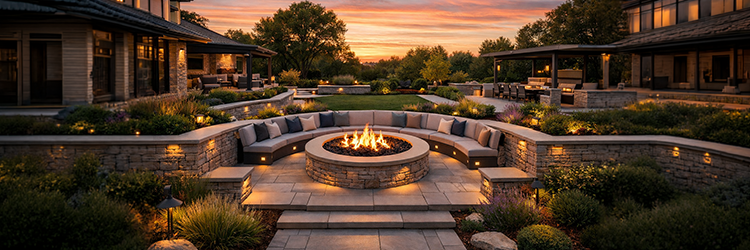
A big fire pit is a large, permanent or semi-permanent outdoor fire feature designed to serve as a functional gathering space. Unlike small tabletop fire bowls or portable camp-style units, a big fire pit is scaled to accommodate comfortable group seating, typically allowing six to twelve people to gather around it at once.
In high-end residential landscaping, big fire pits are typically built-in structures constructed from stone, concrete, brick, or steel. They may be fueled by wood, natural gas, or propane, and they are designed to function as architectural features that anchor the outdoor living area.
Homeowners often underestimate how much scale matters with a fire pit. A feature that looks proportionate in a showroom can feel undersized once it is set within a large estate backyard. Getting the size right relative to the surrounding space, seating arrangement, and hardscape is one of the most important design decisions you will make.
What Types of Big Fire Pits Are There
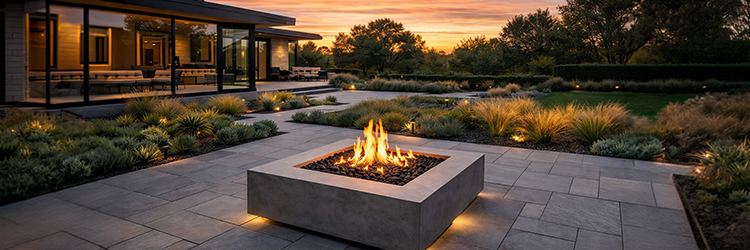
Choosing the right type of fire pit is as important as deciding to add one at all. Each option comes with its own trade-offs around aesthetics, maintenance, safety, and function.
Wood-Burning Fire Pits
Wood-burning fire pits offer the most traditional and atmospheric experience. The crackle of burning logs, the natural smell of wood smoke, and the organic look of a real flame are difficult to replicate with other fuel sources. These are typically built from stone or brick and are deeply embedded in the look of classic estate landscaping.
The trade-off is maintenance. Wood-burning pits require regular ash removal, seasoned firewood, and more attention during use. Smoke direction can shift with the wind, which is worth factoring into your seating arrangement and placement strategy.
Gas Fire Pits (Natural Gas or Propane)
Gas fire pits are increasingly common in luxury outdoor design because they combine visual impact with minimal effort. They ignite instantly, produce a clean and consistent flame, and generate no ash or embers. Natural gas versions connect directly to your home’s gas line, providing a continuous fuel supply. Propane-fueled fire pits offer more placement flexibility since they do not require a fixed connection.
For homeowners who entertain frequently, a gas fire pit is often the more practical choice. The flame can be adjusted to suit the mood, turned off cleanly at the end of the evening, and started again in seconds the next time you host.
Built-In vs Freestanding Fire Pits
Built-in fire pits are integrated directly into the landscape or hardscape. They are permanent structures that become part of the property’s architecture, often surrounded by built-in seating, retaining walls, or custom paver work. These are the most impactful options for estates and luxury properties where the outdoor space is designed as an extension of the home.
Freestanding fire pits sit on top of an existing patio or deck surface. They offer more flexibility in terms of placement and can be repositioned if the layout of the outdoor space evolves. High-quality freestanding units in stone, corten steel, or cast concrete can still read as architectural features when selected and placed with intention.
6 Key Benefits of Adding a Big Fire Pit to Your Backyard
1. It Creates a Natural Focal Point for Outdoor Entertaining
A big fire pit gives your outdoor space a clear center of gravity. People naturally move toward a fire. It defines where seating should go, encourages conversation, and creates a reason to spend time outside after dark.
2. It Extends Your Outdoor Season
One of the most practical benefits of a big fire pit is that it keeps your outdoor space usable well into the cooler months. Evenings that might otherwise push you indoors become comfortable when you have a reliable source of warmth nearby.
3. It Increases Property Value
A well-designed fire pit adds measurable financial value to a home. According to data from the National Association of Realtors, homeowners who install an outdoor fire pit can expect to recoup approximately 67% of the project cost at resale.
4. It Supports Your Mental and Physical Well-Being
There is a reason people have gathered around fires for thousands of years. The warmth, the movement of the flame, and the shift in lighting all have a calming effect. Research on the psychology of fire suggests that watching flames is associated with reduced blood pressure and a measurable decrease in stress.
5. It Anchors Your Outdoor Design Structure
A big fire pit does more than add a feature to your backyard. It organizes the space around it. Seating positions, traffic flow, lighting placement, and planting decisions all respond to the fire pit once it is in place.
6. It Adds Versatile Function to Your Outdoor Space
A big fire pit is not a single-use feature. Beyond providing warmth and ambiance, a well-configured fire pit area can accommodate outdoor cooking, casual dining, late-night entertaining, and quiet, solitary evenings in equal measure.
How Do You Place a Big Fire Pit on Your Property
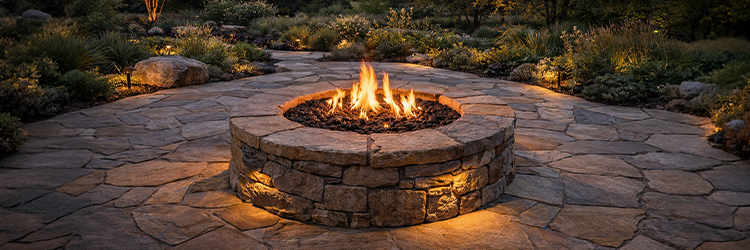
Placement is one of the most consequential decisions in fire pit design. Get it right, and the feature integrates seamlessly into how you live outdoors. Get it wrong, and you end up with a beautiful structure that is underused because it is too far from the main living area or poorly oriented relative to seating and the house.
Several factors should guide placement decisions:
- Safety clearances: Fire safety guidelines recommend a minimum of 10 feet of clearance between a fire pit and any structure, fence line, or overhanging tree. Always confirm local fire code requirements before construction begins.
- Wind patterns: Understanding the prevailing wind direction on your property helps avoid placing seating areas downwind of the fire, especially for wood-burning pits where smoke direction matters.
- Connection to the main living area: A fire pit that requires a long walk from the back door may feel disconnected and inconvenient. On large properties, a secondary fire pit zone can work well when it has its own clear access point.
- Views and sightlines: Position the fire pit to take advantage of the best views on the property. Whether that is a garden, a water feature, or an open sky, the fire pit should face something worth looking at.
- Permit and HOA requirements: Some municipalities require permits for built-in fire features. Homeowner associations may have specific restrictions on fuel type, placement, or construction methods. Confirming these requirements before finalizing the design prevents costly revisions.
How Big Should a Fire Pit Be for a Luxury Backyard
There is no universal answer to this question, but there are clear principles that help determine the right size for a given property and design intent.
A fire pit that is too small for its surroundings will feel underwhelming, a visual afterthought rather than a design anchor. A fire pit that is too large for the space can feel overwhelming and leave insufficient room for comfortable seating.
As a general reference point, most residential built-in fire pits for group entertaining range from 36 to 60 inches in diameter. Larger estate-scale designs may exceed this, particularly when integrated with seating walls or used as the focal point of a defined outdoor room. The surrounding seating area should be generous enough that guests are comfortable, with enough distance from the heat to sit for extended periods.
We recommend thinking about the fire pit zone as a room with walls defined by planting, hardscape, or changes in grade. The fire pit itself should feel proportionate to that room, the way a dining table is proportioned to the dining space that surrounds it.
Final Takeaway
- A big fire pit is more than a backyard accessory. It is a design decision that shapes how your entire outdoor space feels and functions.
- When planned with intention with the right size, material, fuel type, and placement, a fire pit creates a gathering place that serves your household for years and adds genuine value to your property.
- The difference between a fire pit that transforms a space and one that simply sits in it is almost always planning.
- Proportions, materials, sightlines, seating scale, and integration with the broader landscape all determine whether the feature earns its place. These are not decisions that reward guesswork; they reward thoughtful, experienced design.
Work With Sol & Arbor to Design Your Outdoor Fire Feature
At Sol & Arbor, we design luxury residential landscapes entirely remotely, delivering master-planned outdoor environments for high-end properties across the country. Our team understands that a big fire pit is not just an outdoor feature. It is an anchor for the way you live outside, and it deserves to be designed with the same care and precision as any other element of your home.
We work closely with homeowners to develop cohesive backyard plans that integrate fire features, seating zones, planting palettes, and architectural details into a unified outdoor living environment. If you are starting a landscape from scratch or adding a significant new feature to an existing property, our remote design process makes professional-quality planning accessible without requiring you to manage multiple local contractors and consultants.
Your outdoor space has the potential to become one of the most meaningful parts of your home. A thoughtfully designed fire pit is often where that transformation begins. If you are ready to explore what is possible for your property, Sol & Arbor is here to help you bring that vision to life.