Key Takeaways
- Cobblestone is one of the most durable and visually rich hardscape materials available for side yard pathways.
- The laying pattern you choose directly affects both the visual character and structural performance of your path.
- Proper drainage planning beneath and alongside cobblestone prevents long-term shifting, pooling, and deterioration.
- Integrated lighting transforms a cobblestone side yard pathway into a functional and atmospheric feature at night.
A well-placed cobblestone pathway is one of the most transformative upgrades you can make to a side yard. It does more than just connect one part of your property to another. It adds architectural character, manages foot traffic, supports drainage, and gives a luxury home the finished, intentional look it deserves.
In this guide, we walk through everything a homeowner needs to consider when planning a cobblestone pathway in the side yard. From stone selection and laying patterns to drainage planning and lighting integration, these insights will help you design a space that performs beautifully for years.
Why Is Cobblestone a Strong Choice for a Side Yard Pathway
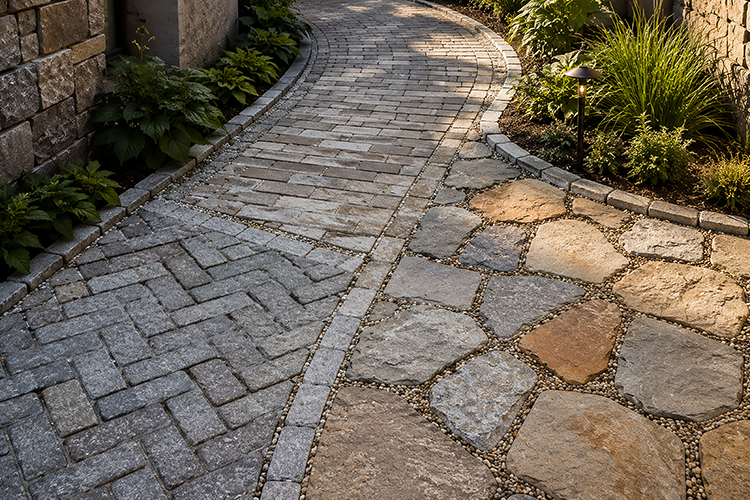
Side yards carry more functional pressure than most homeowners expect. They handle daily foot traffic from the front to the back of the property. They often channel stormwater runoff from the house roof and the surrounding landscape. And they need to work in narrower, more confined spaces where material choices matter even more.
Cobblestone addresses all of these demands. The material is dense and hard, which means it holds up under repeated use without cracking or wearing thin. Its naturally irregular surface provides grip, which reduces slipping on wet days. And because cobblestone is set in individual units rather than poured as a solid slab, it has a natural flexibility that allows the ground beneath it to shift slightly without causing the kind of cracking you would see in concrete.
There is also the visual element to consider. Cobblestone carries a timeless quality that complements a wide range of architectural styles. A traditional home gains warmth and heritage from it. A modern property benefits from the contrast between clean lines and the organic texture of the stone. Either way, a cobblestone pathway communicates permanence and quality in a way that no other surface material quite replicates.
What Are the Best Cobblestone Laying Patterns for a Side Yard
The pattern you choose is not just a design decision. It directly affects how your path handles load, how water moves across the surface, and how the whole space feels visually. Choosing the right pattern for the shape and scale of your side yard is one of the most important early decisions in the planning process.
Herringbone
Herringbone is the most structurally stable laying pattern available. The interlocking V-shaped arrangement of stones distributes weight across the surface in multiple directions, which reduces movement and prevents individual stones from working loose over time. It is an excellent choice for side yards that carry heavy foot traffic or see frequent use. Visually, herringbone adds energy and directionality to the path, which helps a long, narrow corridor feel more dynamic.
Running Bond
Running bond lays each row of stones offset from the one beside it, similar to a brick wall laid on its side. The result is a clean, linear pattern that feels modern and orderly. For a side yard that needs to feel precise and tailored rather than rustic, running bond is one of the most effective options. It also works particularly well when your home has strong horizontal architecture, as the pattern echoes those lines in the ground plane.
Random or Irregular Lay
A random pattern uses cobblestones of varying sizes placed without a repeating grid. The result is an organic, relaxed surface that resembles the cobbled streets and garden paths of older European homes. This pattern is well-suited to properties with natural plantings, mature trees, or a more informal landscape character. It takes more skill to install well, as maintaining consistent joint width and a level surface requires careful attention during laying.
Segmented Spacing with Gravel Joints
One increasingly popular approach involves placing cobblestones in spaced groupings with gravel filled into the joints between them. This technique creates a permeable surface that allows rainwater to pass through rather than running off. For side yards in areas with heavy rainfall or clay-heavy soils, this approach provides both visual interest and practical drainage performance.
Which Cobblestone Materials Are Best Suited to a Side Yard
Not all cobblestones are the same. The material you choose affects the color, texture, maintenance requirements, and long-term performance of your pathway. Here is a clear breakdown of the most commonly used options.
Granite Cobblestone
Granite is the most durable natural stone used in cobblestone pathways. It is hard, dense, and resistant to weathering, staining, and frost. Granite cobblestones hold their color and surface quality over many decades, making them a genuinely long-term investment. They come in a range of cool grays, warm buffs, and deep charcoals, which gives you flexibility to match your home’s exterior and surrounding landscape palette.
Limestone Cobblestone
Limestone cobblestones offer a softer, warmer appearance than granite. They come in creamy beige, warm honey, and dove gray tones, and their tumbled or aged finishes give them a character that suits more traditional or relaxed landscape styles. Limestone is slightly more porous than granite, so it benefits from sealing in wetter climates. The material pairs exceptionally well with low-growing plants along path edges and creates a warm, inviting atmosphere in narrower spaces.
Sandstone Cobblestone
Sandstone brings rich texture and warm, earthy tones to a cobblestone pathway. It is slightly softer than granite, which means it requires a little more care in high-traffic areas but delivers a visual warmth that is difficult to achieve with harder stones. Sandstone works well in side yards with natural planting schemes, shade gardens, or properties with a Mediterranean or rustic architectural character.
Reclaimed Cobblestone
Reclaimed cobblestones sourced from old European streets or historic American urban surfaces carry a character and depth that no new stone can replicate. The worn surfaces, varied tones, and embedded history of reclaimed cobblestone add instant authenticity to a luxury property. They are typically available in limited quantities, which makes early planning important if you want to secure enough material for your specific pathway length and width.
How Wide Should a Cobblestone Side Yard Pathway Be
Width is one of the most frequently underestimated decisions in side yard pathway design. A path that is too narrow creates a cramped, afterthought feeling. A path sized correctly for its use makes the whole side yard feel intentional and well considered.
For a single-person pedestrian path that sees moderate daily use, 36 inches is a comfortable minimum. This width allows easy movement without feeling tight, and it accommodates the occasional piece of furniture or equipment being moved through the space.
For main side yard corridors that carry heavier use, or where two people might walk side by side, 48 inches is a better target. This width also gives enough surface area to let the cobblestone pattern read clearly rather than feeling compressed.
In very narrow side yards where 48 inches is not possible, a single row of larger cobblestones or a stepping stone configuration with cobblestone infill can solve the problem while still delivering visual quality. The key is ensuring the path edge is clearly defined, which creates a sense of intention even in tighter spaces.
What Drainage Planning Does a Cobblestone Pathway Require
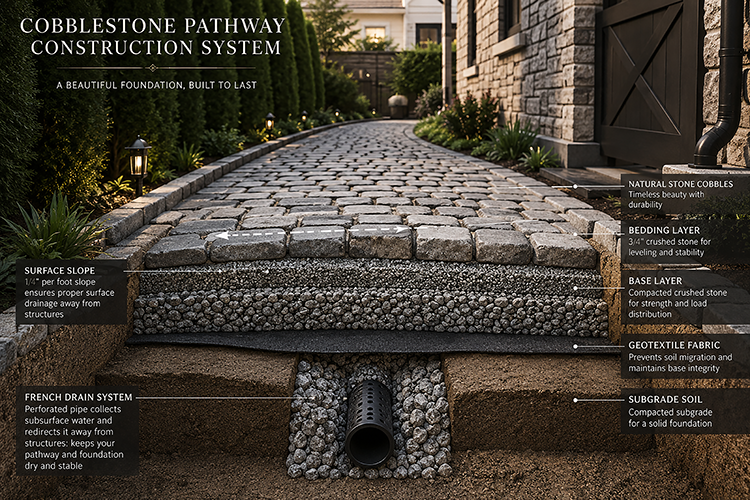
Drainage is where many cobblestone pathways fail over time. A beautiful surface sitting on a poor foundation will shift, settle unevenly, and pool water within a few years. Getting this right from the start is not optional.
Gravel Base Preparation
A properly installed cobblestone path begins with excavation and a compacted gravel base. For most residential applications, a 4 to 6 inch layer of crushed angular gravel provides the drainage and stability the stones above need. In areas with clay-heavy soils or persistently wet conditions, increasing the base depth to 6 to 8 inches reduces the risk of frost heave and chronic moisture retention beneath the stones.
Geotextile Fabric
A non-woven geotextile fabric placed between the native soil and the gravel base prevents fine soil particles from migrating upward into the drainage layer over time. Without this fabric, the gravel base gradually loses its drainage capacity as the soil below works its way into the voids. This is a low-cost, high-impact step that significantly extends the functional life of the pathway.
Surface Slope
The finished surface of the cobblestone path should slope gently away from your home’s foundation. A quarter-inch drop per linear foot is the standard recommendation. This slope ensures that rainfall flows away from the structure rather than pooling beside it. For side yards that run parallel to the house, this means the path should crown slightly toward the center or pitch away from the house wall toward the outer edge of the yard.
French Drain Integration
In side yards with persistent drainage problems or low-lying sections, a French drain installed alongside the cobblestone path provides an additional layer of protection. A perforated pipe wrapped in gravel and fabric collects subsurface water and channels it away from the problem area. When this is part of the initial design rather than a retrofit, it can be integrated invisibly into the landscape.
How Do You Frame a Cobblestone Pathway with Plants and Edges
The quality of a cobblestone pathway is not determined by the stones alone. The edges define it, and the planting alongside it gives it life. These two elements are what separate a pathway that looks placed and deliberate from one that feels like an afterthought.
Edge Restraints
Physical edge restraints keep the cobblestone pattern from spreading over time. Steel, aluminum, or stone edging installed along both sides of the path holds the stones in place and prevents the joints at the perimeter from widening. Beyond the structural benefit, a defined edge also creates a clean visual boundary between the hardscape and the adjacent planting or lawn.
Border Courses
A border course is a row of cobblestones laid in a different orientation or color along the outer edge of the main path. This detail adds a finished, architectural quality to the surface and is one of the simplest ways to elevate the design. A granite border alongside a limestone field, or a contrasting dark stone framing a lighter palette, both achieve a layered look that communicates intentional design.
Low-Growing Edge Plantings
Plants installed along the edges of a cobblestone side yard pathway soften the transition between the hard surface and the garden. Low-growing, spreading varieties work best because they fill the gap between the stone and the planting bed without growing tall enough to encroach on the path itself. Creeping thyme, sedum, or compact ornamental grasses all perform well in these positions and require minimal maintenance once established. In shaded side yards, shade-tolerant groundcovers provide the same softening effect in lower-light conditions.
How Do You Integrate Lighting into a Cobblestone Side Yard Pathway
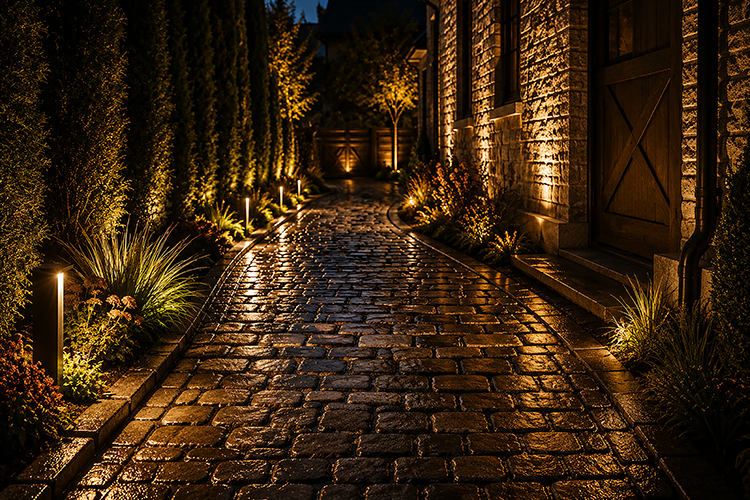
Lighting transforms a cobblestone side yard pathway from a daytime feature into a nighttime experience. It also serves a practical safety function by making the path clearly visible after dark, which reduces the risk of missteps on the uneven natural stone surface.
Path Light Placement
The most effective approach staggers path lights on alternating sides of the pathway rather than placing them in a uniform row on one side. This creates an even wash of light across the full width of the stone surface. Spacing lights between 5 and 15 feet apart, depending on the brightness of each fixture and the ambient light levels in the space, provides consistent coverage without overlighting.
Fixture Height and Aim
Path light fixtures should be positioned slightly taller than the adjacent plantings to prevent foliage from obscuring the light source. The beam should aim downward onto the walking surface rather than outward at eye level, which eliminates glare for anyone moving along the path. Warm white LEDs with a color temperature in the 2700K to 3000K range create an inviting, amber-toned light that complements the natural warm tones of most cobblestone materials.
Pre-Planning Conduit Runs
If you plan to use hardwired low-voltage lighting rather than solar fixtures, the conduit for the wiring should be installed before the cobblestone base is laid. Retrofitting electrical conduit beneath a finished cobblestone surface is disruptive and costly. Planning this infrastructure keeps the installation seamless and the final result polished.
Uplighting Accent Opportunities
Beyond path lights at ground level, accent uplights placed at the base of a wall, hedge, or specimen plant along the side yard create depth and visual layering at night. A cobblestone pathway that is both safely lit along its surface and surrounded by softly illuminated plantings achieves a resort-quality atmosphere that most residential side yards never reach.
How Does a Cobblestone Pathway Connect the Side Yard to the Larger Landscape
The side yard is a transitional space. It connects the front of the property to the back, and it often contains utility elements like gates, AC units, or storage that need to be visually managed. A cobblestone pathway, when designed with the whole property in mind, becomes the thread that ties these different zones together.
When the same cobblestone material used in the side yard pathway also appears in a front entry detail, a rear patio border, or a pool deck edge, the property develops a coherent material language. This kind of connection between spaces is what gives luxury landscapes their sense of being fully designed rather than assembled from separate decisions. The market data support this thinking. According to the National Association of Realtors Remodeling Impact Report, 97% of Realtors consider curb appeal important in attracting buyers, and 92% actively recommend that sellers improve their home’s exterior presentation before listing. A professionally designed pathway that contributes to the property’s overall exterior quality directly supports that first impression.
At Sol & Arbor, this is exactly the kind of thinking we bring to every project. We look at how your side yard connects to the rest of your property and build a plan that ensures each element, including the cobblestone pathway, reinforces the design quality of the whole.
Traffic flow matters as well. A cobblestone side yard path should guide movement naturally without requiring users to make awkward turns or navigate around obstacles. The path’s starting point at the front yard and its arrival point at the back garden should both feel resolved. A gate, a change in level, or a simple planting focal point at each end gives the path a beginning and an end that make the journey through the side yard feel intentional rather than functional.
Final Takeaway
A cobblestone side yard pathway is one of the highest-value improvements you can make to a luxury residential property. It addresses traffic flow, drainage, and visual continuity all at once, and it does so with a material that only becomes more characterful over time.
The details that matter most are the ones that are hardest to retrofit: the base preparation beneath the stones, the drainage planning alongside them, the edge definition that holds the pattern together, and the lighting that makes the path usable and beautiful after dark. Getting each of these right requires thinking about the pathway not as a single feature but as part of a connected outdoor system.
That is the approach we take at Sol & Arbor. Our remote landscape design process gives homeowners access to professional planning expertise regardless of location. We develop detailed plans that address your cobblestone pathway within the context of your full property, ensuring that every material choice, drainage solution, and lighting placement works together. The result is a side yard that performs well, holds its design quality, and enhances the overall value of your home for the long term.
Frequently Asked Questions
How long does a cobblestone pathway last?
When properly installed with a compacted gravel base and appropriate edge restraints, a cobblestone pathway can last for several decades with minimal intervention. The individual-stone construction means repairs are straightforward. A stone that shifts or is damaged can be lifted and reset without disturbing the rest of the surface.
Does cobblestone work in a very narrow side yard?
Yes. Cobblestone is one of the more adaptable materials for narrow spaces because the stones are small enough to be cut and arranged to fit tight configurations. A path as narrow as 30 to 36 inches can still accommodate a full cobblestone surface with proper edge definition. For extremely confined side yards, a single central row of larger stones with cobblestone infill on the sides is another effective approach.
How do you prevent weeds from growing between cobblestones?
The most effective weed prevention strategy is a combination of geotextile fabric beneath the gravel base and a stabilizing joint material such as polymeric sand. The fabric prevents weed seeds from accessing fertile soil below the path, while a properly filled joint leaves little space for weed establishment at the surface. Spot treatment handles any breakthrough growth.
Can a cobblestone side yard path handle drainage equipment or utility access?
Yes, with some planning. Areas of the path that need to allow access to utility equipment, like cleanouts or irrigation valves, can incorporate removable stone sections or a small gravel zone that is easy to move. Designing these access points into the layout from the beginning keeps the overall path looking intentional while maintaining the practical access you need.